Family Life With a Disabled Child: The Quiet Dynamics No One Sees
Family life with a disabled child brings a unique blend of challenges and deep connection. Through it all, families discover that disability doesn’t diminish their home—it expands it, revealing a deeper sense of joy, purpose, and togetherness.
The Ability Harbor Team
4/8/20262 min read
Every family grows and changes over time, but when you’re raising a child with a disability, that growth often takes on a deeper, more complex shape. The journey can be beautiful, heartbreaking, exhausting, and transformative—all at the same time. Each family member feels the impact in their own way, and understanding those dynamics can help create a home where everyone feels seen, supported, and valued.
Parents: Partners in Adaptation
For parents, life often becomes a balancing act between love, advocacy, and sheer logistical challenge. There’s the emotional weight of appointments, decisions, therapies, and sometimes grief for the version of parenthood they imagined. But there’s also an incredible bond formed in the process—a kind of strength that grows from showing up day after day, even when the path is unclear.
Communication becomes essential. Parents may cope differently—one might pour energy into research and planning, while the other focuses on emotional connection or day-to-day caregiving. Neither approach is better; both are necessary. Giving each other space to feel, process, and ask for support is a powerful way to stay connected as a team.
Siblings: Navigating Big Feelings in Small Bodies
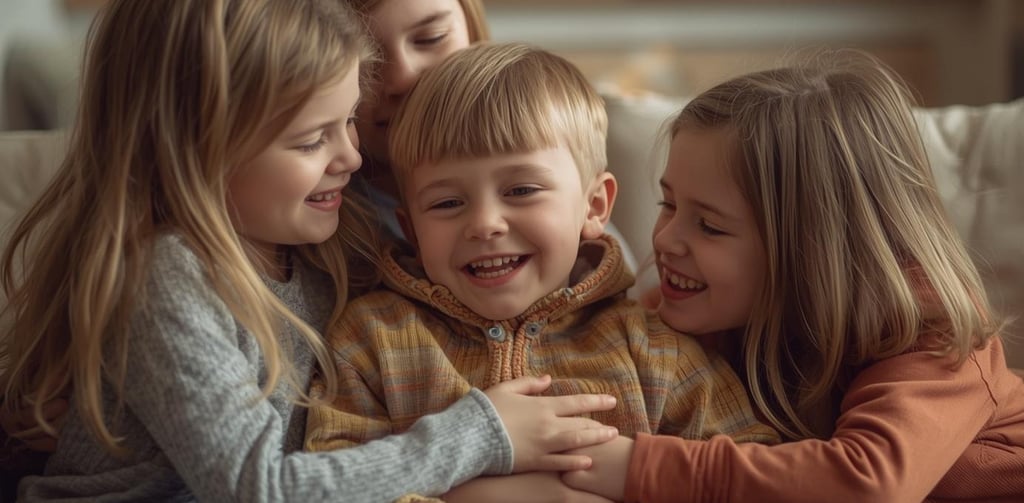
Siblings of a child with a disability often grow up with a unique blend of empathy, patience, and resilience. But that doesn’t mean the experience is always easy. They might feel protective, proud, or deeply connected—and also confused, jealous, or overlooked at times.
It’s important for parents to acknowledge these complex feelings without judgment. Siblings benefit when they have:
Dedicated one-on-one time with a parent
Clear, age-appropriate explanations of their sibling’s disability
Permission to express frustration or sadness
Opportunities to have their own interests and identity celebrated
When siblings feel emotionally supported, they don’t just adjust—they thrive in ways that often shape their character for life.
The Family as a Whole: Redefining Normal
Families raising a disabled child often have a different rhythm, one that might not look like everyone else’s. Routines are built around therapies, medical care, accessibility, or sensory needs. Plans are flexible. Wins—big or small—are celebrated differently and more deeply.
Over time, many families discover that these changes create a new kind of normal. One filled with perspective. Gratitude for small things. Fierce advocacy. And a sense of unity that comes not from everything being easy, but from learning to navigate challenges together.
Grace and Growth
The most important ingredient in managing family dynamics is grace—grace for each other and grace for yourself. Some days the house is calm and connected; other days it feels like everything is falling apart. Both are okay. Both are real.
Families raising a child with a disability are not defined by the challenges they face but by the love that grows around those challenges. When each member is supported, understood, and given space to be human, the family becomes not just a unit—but a team.
Grow in Grace.
Connect
Reach out anytime with suggestions, comments, for support or questions. We enjoy hearing from our community!
welcome@theabilityharbor.com
© 2026. All rights reserved.
Follow us on Instagram!
Founder's Story
As a medical professional, I spent my entire career caring for people at their most vulnerable. I had the privilege of standing beside families as they welcomed new life and holding hands as others said goodbye to someone they loved dearly. My work was never just a job—it was a calling, and I poured my heart and soul into it.
In 2005, everything changed. I was diagnosed with a brain tumor, a blow I never expected. Overnight, I found myself on the other side of the medical world—the patient instead of the professional. Over the years, I faced multiple surgeries, chemotherapy trials, and the latest radiation therapies. Each offered hope, but none could stop the tumor’s relentless growth. Eventually, I had to face the painful truth that I could no longer continue the work I loved and depended on. That loss brought its own kind of grief.
Not long after my third surgery and another round of radiation, I experienced a medical emergency at home—status epilepticus. Simply put, it’s a seizure lasting more than five minutes or a series of seizures without regaining consciousness in between. Quick treatment is essential to prevent permanent injury or even death. They estimated I was on the floor for several hours before help arrived.
When I woke up four days later, everything felt unfamiliar. My memory was clouded, my body unsteady, and I had no idea what had happened. What I did learn was that my life had changed permanently. I now had uncontrolled epilepsy caused by extensive scarring from surgeries and radiation.
I spent the next three months in a neurological rehabilitation program. I relearned how to balance and move. I worked through cognitive challenges. I learned how to adapt and rebuild my independence. It was a long, humbling journey—but I wasn’t alone. With an incredible support network and a determination to keep moving forward, I slowly began piecing my life back together.
Light and Love.