How to Talk With Your Child About Their Disability
A compassionate guide for parents, offering gentle, supportive ways to approach the conversation and help your child understand their story with strength and pride.
The Ability Harbor Team
4/7/20263 min read

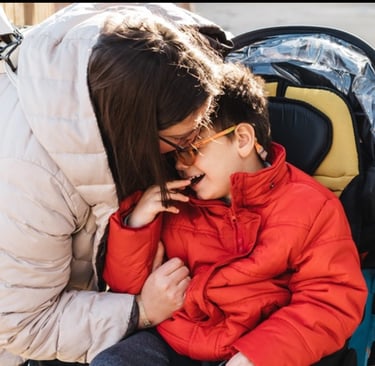
Talking with your child about their disability can feel like one of the most tender conversations you’ll ever have. You want to say the right things, offer reassurance, and build confidence—all while navigating your own emotions. The good news? You don’t have to do it perfectly. You just have to do it with love, honesty, and openness.
Here are gentle, supportive ways to approach the conversation and help your child understand their story with strength and pride.
Start With Love, Not Labels
Before you talk about diagnoses or differences, ground the conversation in what your child already knows: they are loved, valued, and wonderfully themselves.
Children take their cues from you. If you speak with calm confidence and curiosity, they’ll feel safe enough to follow your lead.
Use Language That Matches Their Age
You don’t need medical terms or complicated explanations. Start with what they experience day to day:
“Your brain works in a unique way.”
“Your body needs extra support to do some things.”
“Everyone has things that help them—this is something that helps you.”
As they grow, you can add more detail. The conversation will naturally expand over time.
Be Honest—Even When It’s Hard
Children sense when something is being hidden. Honest conversations build trust and help them understand that their disability is not something to fear or avoid.
You can say things like:
“This is part of who you are, and it’s something we’ll navigate together.”
“Some things might be harder, and that’s okay. Hard doesn’t mean impossible.”
Honesty gives them permission to ask questions—and ask them again later when they’re ready for more.
Celebrate Their Strengths
A diagnosis is not the whole story. Your child is a mosaic of strengths, quirks, dreams, talents, and challenges—just like everyone else.
Help them see both sides:
“This is why you’re so creative.”
“This is why you think in ways other people don’t.”
“This is why you’re so determined.”
The goal isn’t to ignore challenges but to balance them with the truth of their brilliance.
Invite Their Feelings In
Children need space to react—curiosity, sadness, pride, frustration, or even relief.
Ask open-ended questions:
“How does that make you feel?”
“What questions do you have right now?”
“Is there anything that feels confusing or worrying?”
Let your child know that every feeling is valid and welcomed. You’re not just giving information—you’re building emotional safety.
Give Them a Voice
As they get older, involve them in decisions about supports, tools, or accommodations. This teaches self-advocacy and helps them feel empowered rather than defined by their diagnosis.
You’re helping them build the lifelong skill of speaking up for what they need.
Normalize Disability
Show your child that disability is part of the natural diversity of human life.
Read books together featuring disabled characters. Watch shows with disabled representation. Point out role models who share similarities with them.
The message becomes clear:
“You belong. You’re not alone. There are people in the world who live, thrive, and succeed with disabilities—just like you.”
Keep the Conversation Going
This isn’t a one-time talk—it’s a series of conversations that grow with your child.
As they mature, their understanding will deepen, and your guidance will matter even more. The most important thing is that they know you’re a safe place to return to.
A Final Word of Encouragement
You don’t have to have every answer. You don’t have to be the perfect parent.
Your presence, patience, and willingness to walk through this with your child matter far more than any script.
Talking about disability is talking about identity, belonging, and resilience—and you’re giving your child the gift of knowing they never have to navigate it alone.
Connect
Reach out anytime with suggestions, comments, for support or questions. We enjoy hearing from our community!
welcome@theabilityharbor.com
© 2026. All rights reserved.
Follow us on Instagram!
Founder's Story
As a medical professional, I spent my entire career caring for people at their most vulnerable. I had the privilege of standing beside families as they welcomed new life and holding hands as others said goodbye to someone they loved dearly. My work was never just a job—it was a calling, and I poured my heart and soul into it.
In 2005, everything changed. I was diagnosed with a brain tumor, a blow I never expected. Overnight, I found myself on the other side of the medical world—the patient instead of the professional. Over the years, I faced multiple surgeries, chemotherapy trials, and the latest radiation therapies. Each offered hope, but none could stop the tumor’s relentless growth. Eventually, I had to face the painful truth that I could no longer continue the work I loved and depended on. That loss brought its own kind of grief.
Not long after my third surgery and another round of radiation, I experienced a medical emergency at home—status epilepticus. Simply put, it’s a seizure lasting more than five minutes or a series of seizures without regaining consciousness in between. Quick treatment is essential to prevent permanent injury or even death. They estimated I was on the floor for several hours before help arrived.
When I woke up four days later, everything felt unfamiliar. My memory was clouded, my body unsteady, and I had no idea what had happened. What I did learn was that my life had changed permanently. I now had uncontrolled epilepsy caused by extensive scarring from surgeries and radiation.
I spent the next three months in a neurological rehabilitation program. I relearned how to balance and move. I worked through cognitive challenges. I learned how to adapt and rebuild my independence. It was a long, humbling journey—but I wasn’t alone. With an incredible support network and a determination to keep moving forward, I slowly began piecing my life back together.
Light and Love.