Representation of Disabilities In Social Media and Online Platforms
For a long time, disability representation online was limited or filtered through stereotypes. People were either portrayed as “inspirational heroes” or overlooked entirely. But today, creators with disabilities are reshaping that narrative.
3/22/20261 min read
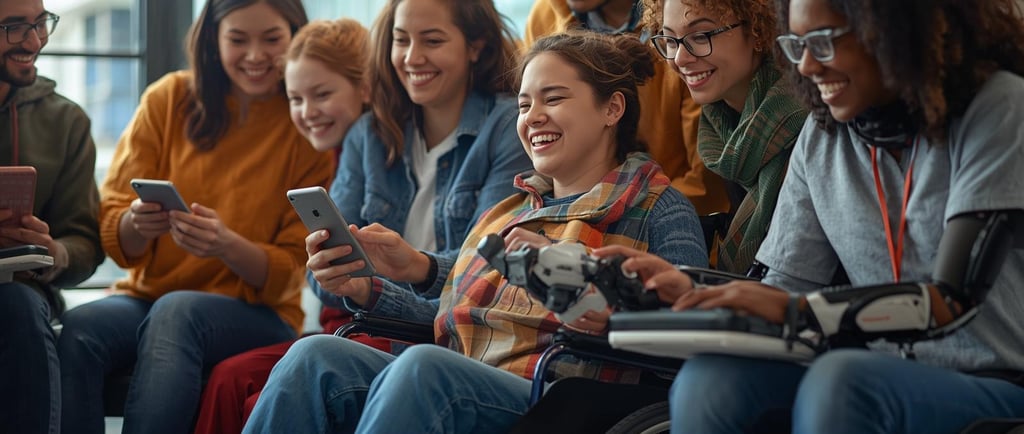
Scroll through social media on any given day and you’ll find a little bit of everything—travel highlights, business tips, life updates, and increasingly, real stories from people living with disabilities. This growing visibility matters more than we often realize.
For a long time, disability representation online was limited or filtered through stereotypes. People were either portrayed as role models or overlooked entirely. But today, creators with disabilities are reshaping that narrative. They’re sharing authentic experiences—both the wins and the hard days—and reminding us that disability is not one-size-fits-all.
This shift is powerful. Representation helps people feel seen. For someone newly diagnosed with a chronic illness or adjusting to a life-changing condition, stumbling across someone who understands can feel like a lifeline. It says, you’re not alone in this.
At the same time, social media has opened doors for advocacy and education. Misconceptions are being challenged in real time. Conversations around accessibility, inclusion, and everyday barriers are reaching audiences who may not have encountered these perspectives otherwise. That kind of awareness creates change—not just online, but in workplaces, communities, and policies.
But let’s be honest—there’s still work to do.
Algorithms don’t always prioritize diverse voices. Accessibility features aren’t consistently used. And sometimes, disability content is still framed in ways that feel more performative than genuine. True representation isn’t just about visibility—it’s about respect, accuracy, and inclusion at every level.
That’s why it matters for all of us to engage thoughtfully. Follow creators with disabilities. Share their voices. Add captions to your videos. Think about accessibility when you post. Small actions, multiplied across platforms, can make a meaningful difference. At its best, social media becomes more than a highlight reel—it becomes a space where everyone belongs. And as representation continues to grow, so does the opportunity to build a more inclusive, understanding digital world for all.
Peace Always
Connect
Reach out anytime with suggestions, comments, for support or questions. We enjoy hearing from our community!
welcome@theabilityharbor.com
© 2026. All rights reserved.
Follow us on Instagram!
Founder's Story
As a medical professional, I spent my entire career caring for people at their most vulnerable. I had the privilege of standing beside families as they welcomed new life and holding hands as others said goodbye to someone they loved dearly. My work was never just a job—it was a calling, and I poured my heart and soul into it.
In 2005, everything changed. I was diagnosed with a brain tumor, a blow I never expected. Overnight, I found myself on the other side of the medical world—the patient instead of the professional. Over the years, I faced multiple surgeries, chemotherapy trials, and the latest radiation therapies. Each offered hope, but none could stop the tumor’s relentless growth. Eventually, I had to face the painful truth that I could no longer continue the work I loved and depended on. That loss brought its own kind of grief.
Not long after my third surgery and another round of radiation, I experienced a medical emergency at home—status epilepticus. Simply put, it’s a seizure lasting more than five minutes or a series of seizures without regaining consciousness in between. Quick treatment is essential to prevent permanent injury or even death. They estimated I was on the floor for several hours before help arrived.
When I woke up four days later, everything felt unfamiliar. My memory was clouded, my body unsteady, and I had no idea what had happened. What I did learn was that my life had changed permanently. I now had uncontrolled epilepsy caused by extensive scarring from surgeries and radiation.
I spent the next three months in a neurological rehabilitation program. I relearned how to balance and move. I worked through cognitive challenges. I learned how to adapt and rebuild my independence. It was a long, humbling journey—but I wasn’t alone. With an incredible support network and a determination to keep moving forward, I slowly began piecing my life back together.
Light and Love.