The Hidden Barriers: Challenges Disabled Voters Face at Polling LocationsYour blog post
Voting isn't truly free unless it's accessible and people with disabilities face these barriers at polling locations every year.
The Ability Harbor Team
3/28/20262 min read
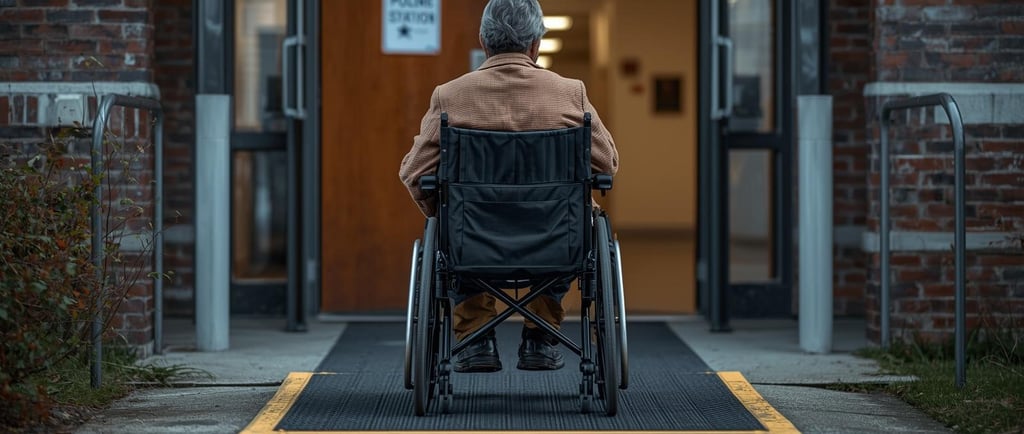
For many Americans, voting is as simple as walking into a polling place, signing a form, and casting a ballot. But for millions of disabled voters, Election Day looks very different. What should be a straightforward civic right often turns into a journey of obstacles, frustrations, and inaccessible systems—reminding us that the right to vote isn’t truly equal unless it’s accessible to everyone.
At The Ability Harbor, we believe that empowerment includes having a voice in the democratic process. Yet far too often, disabled voters encounter the same barriers—year after year—that make participation difficult or even impossible.
Despite federal laws requiring accessibility, many polling places still fall short. Broken ramps, steep walkways, heavy doors, and narrow hallways can make entering the building a challenge. Inside, the layout might be cramped or poorly arranged, leaving little room for mobility devices. For voters who rely on wheelchairs, walkers, or canes, getting to the ballot machine shouldn’t feel like navigating an obstacle course.
Even when voters get inside, the next hurdle often awaits. Many polling locations have accessible voting machines, but they may be outdated, difficult to use, or not functioning at all. For those who are blind, low-vision, or have limited dexterity, a broken or unavailable accessible machine means relying on someone else to cast their vote—stripping away independence and privacy.
Sometimes the biggest barrier isn’t the building or equipment—it’s misunderstanding. Poll workers often receive minimal training on accessibility needs. A voter may be told they can’t bring a service animal inside. Another may be incorrectly told they cannot receive assistance. Others may face impatience or confusion when they request accessible options. These moments leave disabled voters feeling unwelcome or overlooked in a space where they should feel supported and equal.
For many disabled individuals, getting to the polling place is its own challenge. Public transit may be unreliable, paratransit services often require scheduling days in advance, and accessible rideshares may be limited or costly. When transportation becomes a barrier, voting stops being a right and becomes a privilege for only those who can get there.
Long waits disproportionately affect voters with chronic pain, fatigue, mobility limitations, or conditions that require frequent rest. Polling places rarely offer seating throughout the line or provide accommodations proactively. Standing for long periods can force some voters to leave without casting a ballot—not because they don’t want to vote, but because their body simply can’t endure the wait.
Voting barriers don't just inconvenience disabled voters—they silence voices. Real accessibility means more than ramps and machines; it means systems that understand, adapt, and welcome everyone.
At The Ability Harbor, we advocate for a future where every voter can participate fully, confidently, and independently. When society removes barriers for disabled voters, democracy becomes stronger for everyone.
Because a vote isn’t truly free unless it’s accessible.
Connect
Reach out anytime with suggestions, comments, for support or questions. We enjoy hearing from our community!
welcome@theabilityharbor.com
© 2026. All rights reserved.
Follow us on Instagram!
Founder's Story
As a medical professional, I spent my entire career caring for people at their most vulnerable. I had the privilege of standing beside families as they welcomed new life and holding hands as others said goodbye to someone they loved dearly. My work was never just a job—it was a calling, and I poured my heart and soul into it.
In 2005, everything changed. I was diagnosed with a brain tumor, a blow I never expected. Overnight, I found myself on the other side of the medical world—the patient instead of the professional. Over the years, I faced multiple surgeries, chemotherapy trials, and the latest radiation therapies. Each offered hope, but none could stop the tumor’s relentless growth. Eventually, I had to face the painful truth that I could no longer continue the work I loved and depended on. That loss brought its own kind of grief.
Not long after my third surgery and another round of radiation, I experienced a medical emergency at home—status epilepticus. Simply put, it’s a seizure lasting more than five minutes or a series of seizures without regaining consciousness in between. Quick treatment is essential to prevent permanent injury or even death. They estimated I was on the floor for several hours before help arrived.
When I woke up four days later, everything felt unfamiliar. My memory was clouded, my body unsteady, and I had no idea what had happened. What I did learn was that my life had changed permanently. I now had uncontrolled epilepsy caused by extensive scarring from surgeries and radiation.
I spent the next three months in a neurological rehabilitation program. I relearned how to balance and move. I worked through cognitive challenges. I learned how to adapt and rebuild my independence. It was a long, humbling journey—but I wasn’t alone. With an incredible support network and a determination to keep moving forward, I slowly began piecing my life back together.
Light and Love.